
14
Apr 2026
12:48 UTC
Germany Tactical: Truckers, transport-sector workers to hold protest convoy denouncing fuel price-rise from Emden, Lower Saxony, to Berlin on April 17; maintain heightened vigilance
Current Situation
- On April 17, truckers and workers in the transport sector will hold a vehicle convoy from Emden, Lower Saxony, at 07:00 (local time).
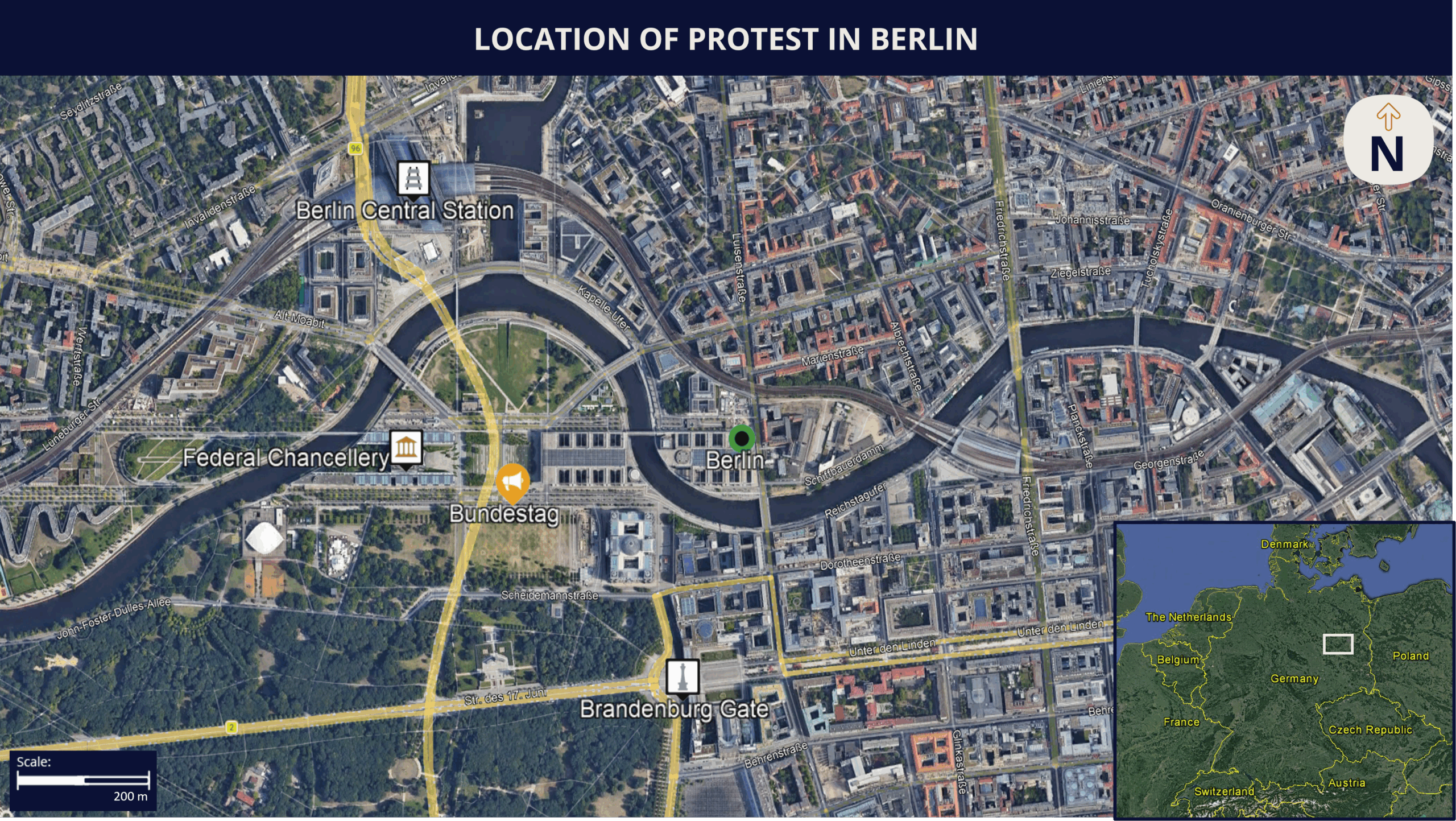
- The protesters will pass through Magdeburg in Saxony-Anhalt, before concluding in front of the Bundestag, the federal parliament, in Berlin.
- The protest is being held against rising fuel prices in Germany.
- Local media reports indicate that this action, organized by Sebastian Bormann, a private citizen from Emden, is being amplified by right-wing digital ecosystems via TikTok and other platforms, framing the event as the “biggest general strike” and “largest demonstration in history.” The far-right Alternative fur Deutschland (AfD)-affiliated channels have also promoted similar content.
Source: Twitter/X
Assessments & Forecast
- Although no recent protests have taken place in Germany regarding the protest issue, given heightened sentiments and social media estimates, the convoy is likely to attract participants in the low to mid hundreds, with high dozens to low hundred vehicles involved as well. In contrast, the Berlin gathering is expected to attract significantly higher turnout, potentially in the mid- to high-thousands, driven by its visibility, symbolic location, and amplification across digital platforms, including support from right-wing ecosystems, with local media indicating that police are preparing for up to approximately 10,000 participants.
- Given the decentralized and loosely organized nature of the protest, mirroring recent fuel price-related mobilizations in countries such as Ireland and Norway, the action is likely to rely on slow-moving vehicle convoys and ad hoc blockades. Participants are expected to employ rolling slowdowns along key transport corridors to maximize visibility and disruption. Although specific route details have not been formally confirmed, disruptions are likely along major eastbound transit routes, particularly the Bundesautobahn 30, which connects northwestern Germany to the broader highway network leading toward Berlin. Secondary federal and regional roads may also experience intermittent congestion as convoy participants avoid stricter highway controls or attempt to regroup.
- As the convoy approaches Berlin, traffic disruption risk is expected to increase, with likely slowdowns and congestion along entry points in the city. In central Berlin, protesters are expected to stage a stationary demonstration near the Bundestag, which will likely result in localized road closures, pedestrian congestion, and heightened police presence in the government district.
- While recent similar protest actions in Ireland and Norway against fuel price hikes have transpired largely peacefully, the likely use of disruptive tactis as well as likely participation of radical right-wing and anti-government entities in this action increase the potential for unrest during this rally. Instances of unrest will likely manifest as scuffles between protesters and police and disgruntled commuters affected by slow convoys. The risk of unrest is expected to further increase during the protest outside the Bundestag, due to higher expected turnout and participation of right-wing groups.
- Given the expected scale of disruptions, police are likely to deploy a bolstered presence to oversee proceedings and facilitate traffic flow, including along convoy routes, at key autobahn junctions and entry corridors into Berlin, and most heavily around the Bundestag. In the event of prolonged disruptions or escalating unrest, authorities will likely adopt forcible measures, including orders to disperse, forcible removal of protesters, and targeted arrests to restore order.
- Additionally, although no associated protests have been announced, the decentralized nature of this action increases the likelihood of sporadic copycat protests in other cities in the coming days. These are likely to be small-scale, uncoordinated, and short-notice, potentially causing localized disruptions, particularly if similar convoy or blockade tactics are adopted.
Recommendations
- Those operating or residing in Germany on April 17 are advised to maintain heightened vigilance in the vicinity of major motorway interchanges along the A30 and in the vicinity of the Bundestag due to the risk of unrest.
- Allot for disruptions to pedestrian and vehicular traffic as well from the early morning hours.
- Closely monitor social media and messaging platforms, including channels linked to right-wing-aligned ecosystems, for indications of route changes, escalation calls, or spillover protests.
COUNTRY RISK LEVEL
Low
AFFECTED AREA
Berlin, Germany
INCIDENT RISK LEVEL
Medium
STRENGTH OF SOURCE
Credible
Current Situation
- On April 17, truckers and workers in the transport sector will hold a vehicle convoy from Emden, Lower Saxony, at 07:00 (local time).
- The protesters will pass through Magdeburg in Saxony-Anhalt, before concluding in front of the Bundestag, the federal parliament, in Berlin.
- The protest is being held against rising fuel prices in Germany.
- Local media reports indicate that this action, organized by Sebastian Bormann, a private citizen from Emden, is being amplified by right-wing digital ecosystems via TikTok and other platforms, framing the event as the “biggest general strike” and “largest demonstration in history.” The far-right Alternative fur Deutschland (AfD)-affiliated channels have also promoted similar content.
Source: Twitter/X
Assessments & Forecast
- Although no recent protests have taken place in Germany regarding the protest issue, given heightened sentiments and social media estimates, the convoy is likely to attract participants in the low to mid hundreds, with high dozens to low hundred vehicles involved as well. In contrast, the Berlin gathering is expected to attract significantly higher turnout, potentially in the mid- to high-thousands, driven by its visibility, symbolic location, and amplification across digital platforms, including support from right-wing ecosystems, with local media indicating that police are preparing for up to approximately 10,000 participants.
- Given the decentralized and loosely organized nature of the protest, mirroring recent fuel price-related mobilizations in countries such as Ireland and Norway, the action is likely to rely on slow-moving vehicle convoys and ad hoc blockades. Participants are expected to employ rolling slowdowns along key transport corridors to maximize visibility and disruption. Although specific route details have not been formally confirmed, disruptions are likely along major eastbound transit routes, particularly the Bundesautobahn 30, which connects northwestern Germany to the broader highway network leading toward Berlin. Secondary federal and regional roads may also experience intermittent congestion as convoy participants avoid stricter highway controls or attempt to regroup.
- As the convoy approaches Berlin, traffic disruption risk is expected to increase, with likely slowdowns and congestion along entry points in the city. In central Berlin, protesters are expected to stage a stationary demonstration near the Bundestag, which will likely result in localized road closures, pedestrian congestion, and heightened police presence in the government district.
- While recent similar protest actions in Ireland and Norway against fuel price hikes have transpired largely peacefully, the likely use of disruptive tactis as well as likely participation of radical right-wing and anti-government entities in this action increase the potential for unrest during this rally. Instances of unrest will likely manifest as scuffles between protesters and police and disgruntled commuters affected by slow convoys. The risk of unrest is expected to further increase during the protest outside the Bundestag, due to higher expected turnout and participation of right-wing groups.
- Given the expected scale of disruptions, police are likely to deploy a bolstered presence to oversee proceedings and facilitate traffic flow, including along convoy routes, at key autobahn junctions and entry corridors into Berlin, and most heavily around the Bundestag. In the event of prolonged disruptions or escalating unrest, authorities will likely adopt forcible measures, including orders to disperse, forcible removal of protesters, and targeted arrests to restore order.
- Additionally, although no associated protests have been announced, the decentralized nature of this action increases the likelihood of sporadic copycat protests in other cities in the coming days. These are likely to be small-scale, uncoordinated, and short-notice, potentially causing localized disruptions, particularly if similar convoy or blockade tactics are adopted.
Recommendations
- Those operating or residing in Germany on April 17 are advised to maintain heightened vigilance in the vicinity of major motorway interchanges along the A30 and in the vicinity of the Bundestag due to the risk of unrest.
- Allot for disruptions to pedestrian and vehicular traffic as well from the early morning hours.
- Closely monitor social media and messaging platforms, including channels linked to right-wing-aligned ecosystems, for indications of route changes, escalation calls, or spillover protests.
COUNTRY RISK LEVEL
Low
AFFECTED AREA
Berlin, Germany
INCIDENT RISK LEVEL
Medium
STRENGTH OF SOURCE
Credible
Related Reports
Germany
-
 ProtestGermany Tactical: Healthcare-sector protest slated at Platz der Menschenrechte 1 in Hanover from 12:00 (local time) on June 10; allot for disruptions
 -
 ProtestEurope Tactical: Protests by Albanian diaspora against proposed luxury resort in Zvernec to be held in multiple cities regionwide on June 5-8; maintain heightened vigilance
 -
ProtestEurope Tactical: Anti-Iranian government protests slated in several cities on June 2-6; maintain heightened vigilance
-
ProtestGermany Tactical: Anti-government protest to take place at Platz des 18. Marz in Berlin from 09:00 (local time) on June 8; maintain heightened vigilance
Related Reports
Germany
-
ProtestGermany Tactical: Healthcare-sector protest slated at Platz der Menschenrechte 1 in Hanover from 12:00 (local time) on June 10; allot for disruptions
-
ProtestEurope Tactical: Protests by Albanian diaspora against proposed luxury resort in Zvernec to be held in multiple cities regionwide on June 5-8; maintain heightened vigilance
-
ProtestEurope Tactical: Anti-Iranian government protests slated in several cities on June 2-6; maintain heightened vigilance
-
ProtestGermany Tactical: Anti-government protest to take place at Platz des 18. Marz in Berlin from 09:00 (local time) on June 8; maintain heightened vigilance